This post is more than 12 years old
Politics move quickly and opinions evolve. There's a good chance I no longer hold some of the opinions expressed in the post below
—Mustapha
Let the Newspapers Die in Peace
August 13, 2014 · Mustapha Hamoui
Newspapers all over the world are diminishing. Don’t make it harder for them…
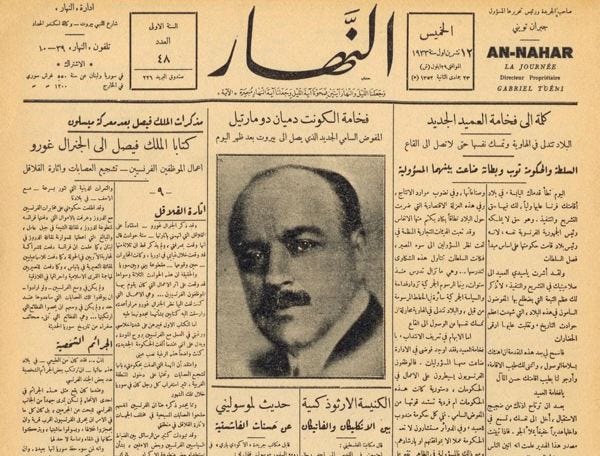
There has been an awful lot of snickering online recently, about how low the venerable Annahar has gotten in its quest for clicks. Aside from the fluff which has markedly increased, there is alarm among the intelligentsia that even their reporting quality is diminishing. One particularly jarring instance was the newspaper’s reporting that Hillary Clinton supposedly admitted that the USA created the ISIS terrorist group.
The reactions varied from concerned disappointment to gleeful schadenfreude, but everyone seems to assume that the reduction in quality is because of bad or neglectful management; that Neila Tueni is somehow a serial disappointer who decided to disappoint her readers after having disappointed her voters. But the bitter truth is that there is nothing anyone can do to save Annahar or any newspaper for that matter, and blaming it would be tantamount to blaming a terminal cancer patient for dying.
“People Don’t Read Newspapers Anymore”
The trope that people have stopped reading newspapers has been around for many years. It was repeated after every media invention that was made. “The radio will kill newspapers”, “TV will kill newspapers”, even “cinema will kill newspapers” were refrains that were heard across the ages, but the newspaper survived. So it’s tempting to believe that this is yet another manufactured crisis, and another false alarm. But this time it’s real: The Internet is killing the newspaper, at least in the form that we’re used to. It’s being replaced on the breakfast table by your facebook and twitter feeds, which is where you probably discovered the outrage about Annahar’s quality.
New York Times reporter David Carr has been writing about the demise of print for a while. He wrote (highly recommended) a few weeks ago about how difficult it is for print to compete with the internet:
Think about what happened when the Malaysian airliner was shot down in eastern Ukraine. No matter where you were, or what you were doing, an ambient feed of information pulsed and heaved all around you. Graphic images soon appeared in social media feeds and breathless news alerts arrived in the inboxes of anyone with even a casual interest.
[…] Nothing can compete with the shimmering immediacy of now, and not just when seismic events take place, but in our everyday lives. We are sponges and we live in a world where the fire hose is always on. […] Online, we are always beckoned forward to the next great thing, often right in the middle of what we thought we wanted to read about. Consider how many times you have clicked a link early in an article and never returned to what brought you there in the first place.
So what can be done about it? Who is to blame and how can this be “fixed”? David Carr again, in another article from a few days ago:
So whose fault is it? No one’s. Nothing is wrong in a fundamental sense: A free-market economy is moving to reallocate capital to its more productive uses, which happens all the time. Ask Kodak. Or Blockbuster. Or the makers of personal computers. Just because the product being manufactured is news in print does not make it sacrosanct or immune to the natural order.
“But Lebanon is Different”
The least mentioned detail about Annahar these days is that it is actually the Lebanese newspaper that has most tried to join the digital age. It has redesigned its website often, it embraced social media, it even dabbled with online video. But most notably, it has overhauled the entire print edition, complete with a custom font designed by Nadine Chahine and a layout done by one of the world’s foremost newspaper layout experts.
But no matter how much they try, this will not change the fundamental economics: Advertisers are realizing that there are many cheaper ways to reach newspapers’ audiences that don’t involve printing machines at dawn and trucks driving across the country. Readers are also realizing that they can read fresher, more immediate news for free. Even the politicians who used to support newspapers may be starting to realize that their investment may not be worth it. When that happens, the newspapers in Lebanon will be truly dead.
In any case, don’t kick a horse while it’s dead and try to be empathetic to a newspaper’s demise.