This post is more than 13 years old
Politics move quickly and opinions evolve. There's a good chance I no longer hold some of the opinions expressed in the post below
—Mustapha
The Significance of Hariri’s Civil Marriage Position
January 31, 2013 · Mustapha Hamoui
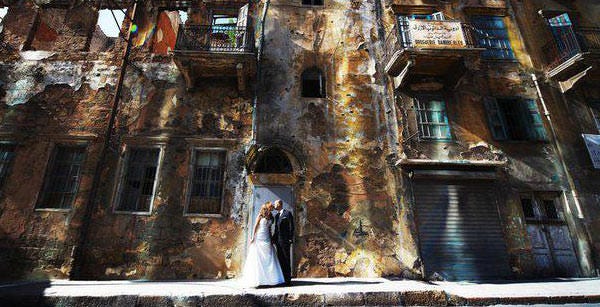
— There is still hope (Photo: The wedding of Randa & Tarek Kabrit by Marco Schwarz ) —
There are many things to be said about the various parts of Mr. Saad Hariri’s interview on Kalam el Nass, and I’m sure we’ll read a fair amount of commentary in Friday’s press. But in this post I want to bring your attention to a couple of political points that are important to understand in relation to his historic position on civil marriage (and I don’t use the word “historic” lightly).
Moderate Sunnis finally found a voice
In my previous post, I wrote that moderate Sunnis don’t support civil marriage. Many readers mistook that for an indication that those moderates support the Mufti and are hard-set against the idea of an optional civil marriage. I should have made it clearer that it’s not true. Many Sunnis might disagree with civil marriage, but that doesn’t mean that they want to impose their opinions on others. Arguably a majority of them doesn’t mind the optional clause.
The moderates were shocked at the Mufti’s extremism but lacked a weighty counter-argument that would oppose it without reducing their religious credentials. This is exactly what Mr. Hariri offered. He compared the civil marriage issue to his visit to Damascus, a visit that he, as Saad el Hariri the person, would have never made, but that when you’re speaking in the name of Lebanon, you speak for the entire country and you leave your person behind. This reminded me of Erdogan’s ideas of separation of Mosque and state, a thought that warmed my heart.
The Death of the “Salafist Hariri” Bugbear
Another important result of Mr. Hariri’s position is that hopefully the idea that he’s some sort of surrogate for hardline islamists will lay to rest. That idea, constantly drummed up in FPM and Hezbollah circles, is designed to scare Lebanese Christians to serve a sinister geopolitical agenda. Mr. Hariri’s public position in support of civil marriage and against the mufti will by all means beget a loud Islamist backlash, creating dissonances that will need to be resovled in people’s minds.
Hopefully, there will be a more nuanced understanding of the Future Movement as a broad political movement with real tension between a liberal wing (those whose children are the partygoers he referred to) and a conservative wing which wears its religion on its sleeves and scares people from Tripoli’s roundabouts. Mr. Hariri’s position might be politically risky (he will expose himself to electoral challenges from the religious right), but it was probably worth it considering the state of disarray his more moderate supporters were in.
Hold the champagne
Mr. Hariri still has a lot to prove, and a white knight return is far from guaranteed. His challenges include unifying March 14 before the elections, coming up with a credible alternative to Mr. Mikati’s government and proving that he can rule.
But forget all of that for the moment and savour this delicious and historic precedent in Lebanon: A Lebanese Sunni leader coming out publicly against a Mufti and supporting the civil union of Lebanese couples.