This post is more than 14 years old
Politics move quickly and opinions evolve. There's a good chance I no longer hold some of the opinions expressed in the post below
—Mustapha
Antiquities and Home
October 1, 2012 · Mustapha Hamoui
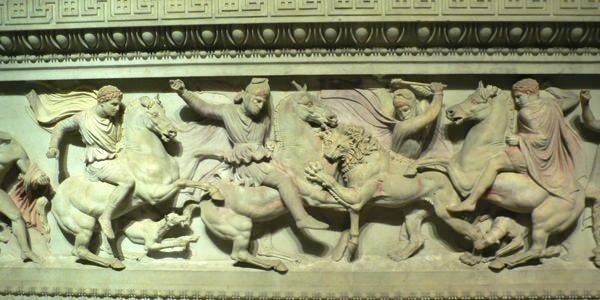
The Alexander Sarcophagus, proudly owned by the Istambul archeological museum
This morning, I was reading with bewilderment and a bit of amusement an article describing Turkey’s efforts to “repatriate” turkish antiquities from international museums. The turkish cultural authorities have been aggressively and successfully asserting their rights to priceless items, shocking and alarming museum around the world from the Louvre in Paris to the Metropolitan museum of art in the U.S.
Among the various tactics that the turks employed was the use of shame:
Thievery and looting are wrong, Turkey says, no matter when they occurred. “Artifacts, just like people, animals or plants, have souls and historical memories,” said Turkey’s culture minister, Ertugrul Gunay. “When they are repatriated to their countries, the balance of nature will be restored.”
This seems reasonable, I thought to myself. Until this point in the article I was rooting for Turkey as the newly empowered underdog claiming back what is rightfully its own from former powers, powers that exploited political dominance to seize priceless archeological treasures. But then I read this part:
“The Turks are engaging in polemics and nasty politics,” said Hermann Parzinger, president of the Prussian Cultural Heritage Foundation … “They should be careful about making moral claims when their museums are full of looted treasures” acquired, he said, by the Ottomans in their centuries ruling parts of the Middle East and southeast Europe. One example is a prized sarcophagus named for Alexander the Great, discovered in Sidon, Lebanon, in 1887, and now in Istanbul’s Archaeological Museum.
The bastards! I thought. I wonder what will happen if the Lebanese minister of culture walked up to the Istanbul Archaeological Museum and demanded the Alexander sarcophagus, which by Turkish standards of morality should belong to us. Doesn’t the sarcophagus also have a soul and historical memory? Shouldn’t the balance of nature be restored by bringing it back to its Lebanese home? Isn’t what’s good for the turkish goose also good for the Lebanese gander?
Home is where it’s safe to be
But then I thought: Can Lebanon handle something as precious as the Alexander sarcophagus? Isn’t this thing better off with the Turks? At least you know that in Istambul, the sarcophagus won’t be “accidentally” bombed if the idiots at Hezbollah and Israel decide to throw bombs and missiles at each other. Not to mention the Lebanese government’s less than stellar record with taking care of antiquities.
Imagine all the moral and political authority it will take for Lebanon to restore the sarcophagus from Turkey. Then imagine how safe and prosperous Lebanon has to be to be able to protect and maintain it.
Come to think of it, this ancient item is a perfect metaphor for the Lebanese state of affairs: Until we can get our stuff together, we’re better off putting our eggs in other people’s baskets.