This post is more than 14 years old
Politics move quickly and opinions evolve. There's a good chance I no longer hold some of the opinions expressed in the post below
—Mustapha
❊ Lebanon and Satellite TV Channels
February 9, 2012 · Mustapha Hamoui
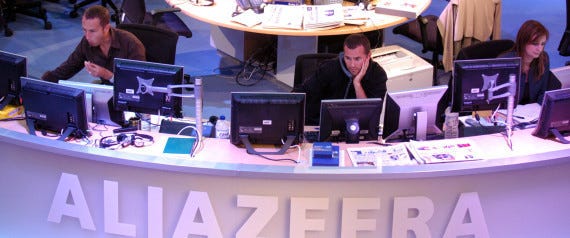
A row between Aljazeera and Lebanese cable providers reveals much about Lebanese consumption of Satellite TV.
If you’ve never lived outside of Lebanon, you’ll be excused for thinking that satellite TV is something you subscribe to by paying some guy a small monthly fee in return for watching every international TV channel under the sun.
The way this works is that a “cable provider” installs a large satellite dish on his roof, connects it to various networks like Orbit Showtime Network, and then sells end users (or neighborhood re-sellers) access to that feed by laying a coaxial cable from his end to the back of your TV (often by throwing the cable from roof to roof). Like the local electricity ishtirak provider, this is a shady operation that involves various kinds of hacking, but everyone does it because it’s convenient.
This is not how things work in the rest of the world. End users are expected to buy decoding boxes to get access to the various channels. The amount you pay depends on which “bouquet” you choose. So if you subscribe to a news bouquet (in which you only get access to 10 news stations), you pay $20/month. But if you want a large selection of stations that includes news, entertainment and movies (like the one many Lebanese take for granted) you could end up paying as much as $150 per month.
Now, Aljazeera has decided to crack down on Lebanese practices and is asking to be paid a charge of $1.5 for every end user of its channels. What is interesting is the reaction of Lebanese neighborhood cable providers, a reaction which is very revealing of Lebanese attitudes to copyrights. United Cable Lebanon (UCL), one of the largest cable providers has responded by taking out Aljazeera from its service packet, and replacing its feed with a message that Aljazeera wants more money.
Basically the cable providers’ argument is that the Lebanese can’t afford to pay so much for cable TV because they don’t have access to credit, and that the government needs to protect them from “businessmen who have been making deals with the foreign satellite companies to exploit the Lebanese market.”
In any other place in the world, this logic would be considered insane. It assumes that people are entitled to cheap satellite TV provided by shady cable providers, and that somehow people are entitled to government protection from the TV stations who are simply asking to be paid licensing fees. This is like asking the government to stop Microsoft from cracking down on $1 bootlegged CDs of Microsoft Office because people are poor and don’t have access to credit.
But Aljazeera, for political reasons, still wants to be watched in Lebanon. So I’m assuming that a settlement will eventually be reached in the end.