This post is more than 18 years old
Politics move quickly and opinions evolve. There's a good chance I no longer hold some of the opinions expressed in the post below
—Mustapha
The Soldier Vs The Pimp.
September 16, 2007 · Mustapha Hamoui
We all love the Army. We all like the sense of security it’s giving the citizens. But is it really its job to arrest felons?
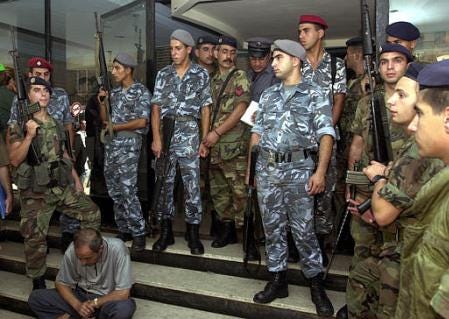
Who deals with criminals?
Considering these are unusual times, I will not nag about the traffic jam the various Army checkpoints have caused in Beirut last week. After all, you never know who’s roaming about with bombs. But take a look at this little announcement in the Army’s website:
????? ??? ????? ??? ?????? 15/8/2007 ?10/9/2007 ?????? 302 ????? ????????? ????????? ???????: ????? ?????? ??????? ??? ????? ???????? ?????? ?????? ???????? ???? ?? ?????? ?????? ??? ????? ??????? ????? ????? ????? ?????? ?????? ??? ?????? ?????? ?????? ??????? ????? ?????? ????? ??? ???????? ?????? ????????????? ?????? ??????? ?????? ????? ???? ????? ???? ????? ??? ??????? ???????? ??????? ?????????? ???????? ??????? ??????? ??????? ??? ???????.
Quick translation: The Army rounded up in the last week 300 people with various offenses including: Missing driving licenses, smuggling, provoking security personnel, vandalizing banners and billboards, prostitution, drug ownership, theft, “insulting the army and the Lebanese government”
This raises some questions: Why isn’t the ISF doing these arrests? Does this have anything to do with Mr. Berri’s prediction that the ISF is so fragile it would split in the case of a showdown? What’s with the “billboard vandalizing” and “insulting the Army” charges? Is the Army’s skin getting thin?
It is tempting to dismiss those questions by saying: “who cares, all the people caught are bad guys”, but that would be a dangerous expansion of the Army’s powers. Regardless of how much we like the Army, it should leave the cops’ job to the cops.